Growing Kids Herbal Aware
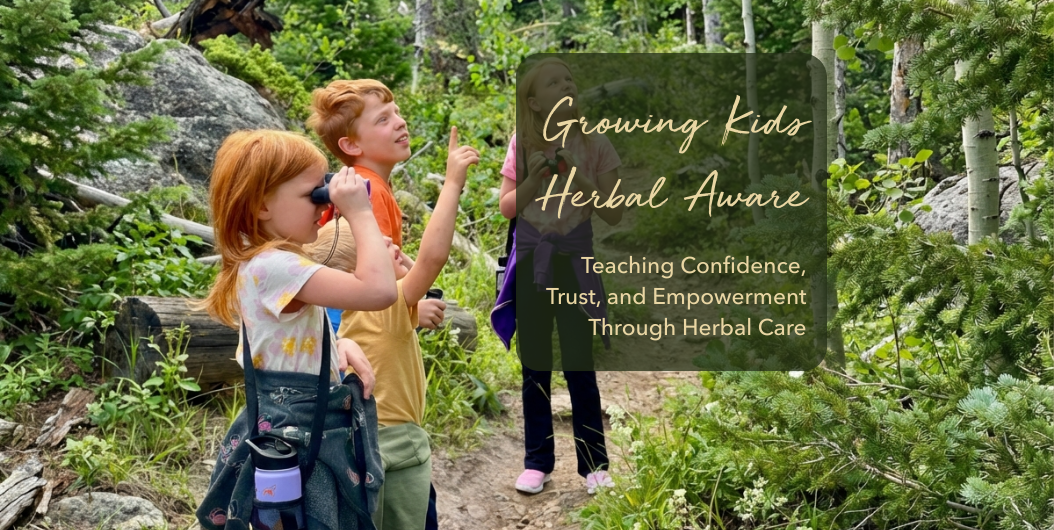
Teaching Confidence, Trust, and Empowerment Through Herbal Care
One of the quiet gifts of doing this work with my kids is watching them learn to listen to their bodies.
Not in a fearful way. Not in a “something is wrong” way. But in a curious, connected way.
Now I hear things like:
“I have a sore throat… can I have some sage?”
“I feel anxious… could I take a little catnip?”
And every time, I’m reminded why we chose this path.
They’re learning that support doesn’t always mean suppression. That plants can help the body do what it already knows how to do. That caring for yourself can be simple, gentle, and intentional.
We talk about why something helps. We talk about listening, not overdoing. We talk about using herbs with respect – not as a shortcut, but as a tool.
This isn’t about raising little herbalists. It’s about raising kids who feel empowered in their own bodies.
And that might be one of my favorite parts of this whole journey.
On our social media, we shared a series of posts breaking down what herbal care is teaching our family. But if I’m being honest, this wasn’t really about herbs at all. It was about confidence. Trust. Discernment. Empowerment.
Here’s what we covered – and what it’s building in our kids.
Lesson 1: Listening Before Fixing
One of the first things my kids learn is that we don’t rush to fix.

Before we reach for anything, we pause.
We ask questions. We listen.
“What does your body feel like?”
“When did it start?”
“Is it loud or quiet? Sharp or dull?”
That pause matters more than I can explain.
It teaches them that their bodies aren’t problems to solve – they’re systems to understand. That not every feeling needs an immediate fix. Sometimes it just needs attention.
And here’s what I’ve noticed: sometimes awareness alone is enough to bring relief.
When they slow down and check in, they often realize the discomfort isn’t as urgent as it first felt. Or they notice a pattern – “Oh, this happened last time I didn’t drink enough water.” Or they just feel less scared because they’re participating instead of panicking.
This isn’t about dismissing what they feel. It’s about teaching them to observe first, then respond.
That skill, listening to your body without immediately trying to override it, is one of the most valuable things herbal care has taught our family.
It’s not flashy. It’s not fast. But it builds something deeper than quick relief.
It builds trust. Between them and their bodies. And that lesson alone is worth everything to me.
Lesson 2: Plants as Support, Not Magic
We talk a lot about support in our house.
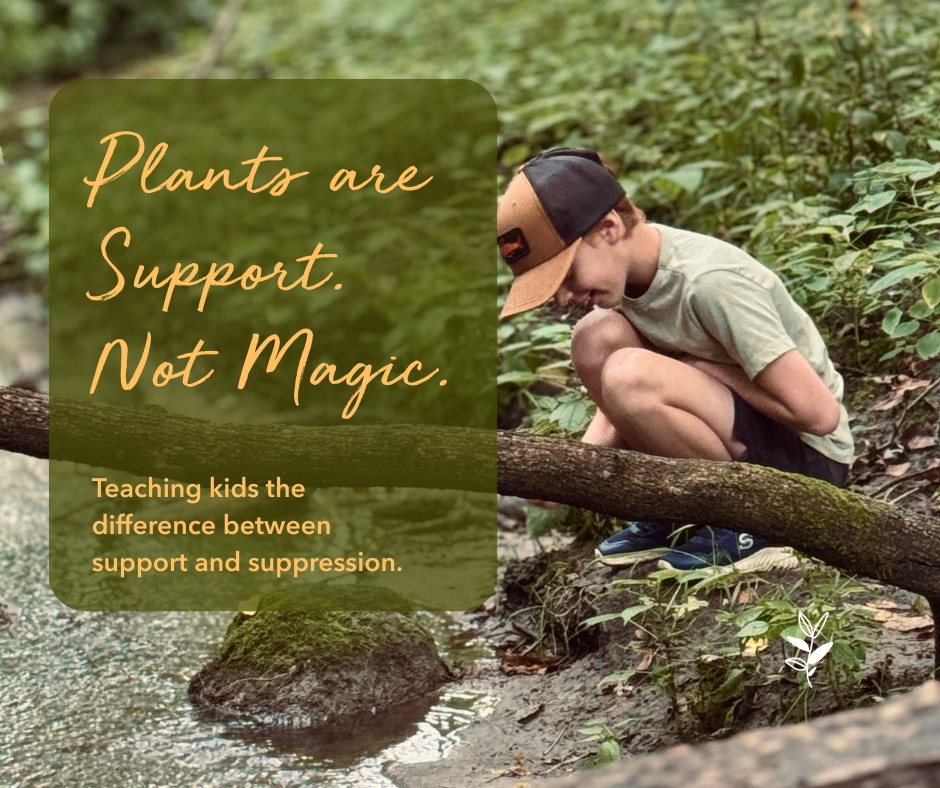
Plants aren’t magic. They don’t override the body or force an outcome. They support the body in doing what it already knows how to do.
That distinction matters, especially when you’re teaching kids.
My kids are learning that healing isn’t about control. It’s about cooperation. It’s about working with their bodies, not against them.
When they take echinacea at the first sign of a scratchy throat, they’re not shutting down a symptom. They’re giving their immune system reinforcement while it does its job.
When they use catnip for anxiety, they’re not numbing the feeling. They’re helping their nervous system settle so they can process what they’re actually experiencing.
This is the difference between support and suppression, and it’s one of the most important lessons herbal care teaches.
Suppression says: “Make this feeling go away right now.”
Support says: “What does my body need to handle this well?”
One teaches kids to override every uncomfortable sensation. The other teaches them to trust their bodies and participate in their own care.
That trust matters. It builds confidence instead of dependence. It teaches them they’re not broken every time something feels off.
Plants aren’t a shortcut. They’re not a quick fix. They’re tools that help the body do what it’s designed to do – and that’s a lesson worth learning young.
Lesson 3: Less Is More
One of the most important lessons my kids learn early is that more isn’t better.
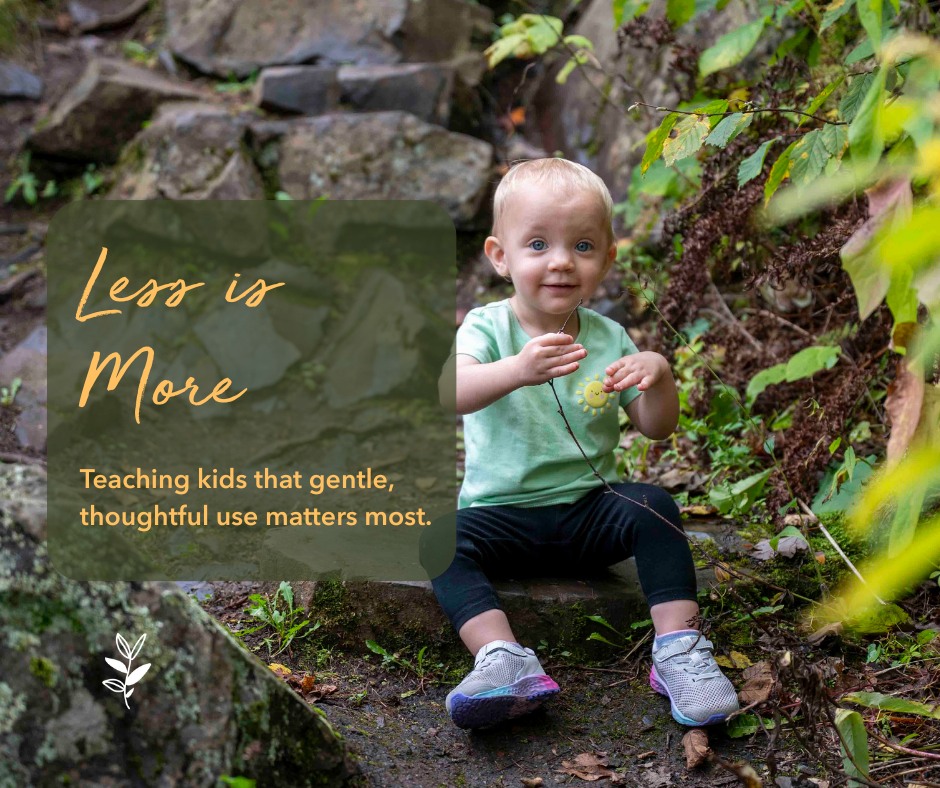
More drops doesn’t mean faster results. Stronger isn’t always smarter. Gentle, thoughtful use matters.
They learn to start small. To notice changes. To respect the process.
Honestly? A lot of us adults never learn this. And herbal care gives kids (and grown-ups) a beautiful framework for it.
When my daughter asks for catnip because she’s feeling anxious, we don’t start with a full dropper “just to make sure it works.” We start with a small amount. We wait. We check in.
“How do you feel now? Is that enough, or do you need a little more?”
This teaches restraint. It teaches observation. It teaches that effective care doesn’t have to be aggressive.
This is also why we focus on single herbs rather than complex blends – especially with kids.
Single herbs let you see what’s actually working. If you give a child a blend with five different plants and they feel better, you have no idea which one helped. But if you give them lemon balm and they calm down, you know. They know. And that knowledge builds confidence.
Blends absolutely have their place. We use them too. But when you’re teaching kids to understand their bodies and how plants support them, simplicity wins.
One herb. One purpose. Clear feedback.
It’s not about being rigid. It’s about being intentional. And that intention teaches kids something crucial: more isn’t always better. Sometimes the most effective care is the smallest amount, used thoughtfully.
That’s a lesson that applies to so much more than herbs. It applies to food, to screen time, to how we handle stress. It’s a foundational principle for living well.
It’s something we’re teaching our kids often. Not because I lecture them about it, but because they experience it every time they reach for a tincture, a balm, or cream.
Lesson 4: Naming What They Feel
Herbal care is teaching my kids language.
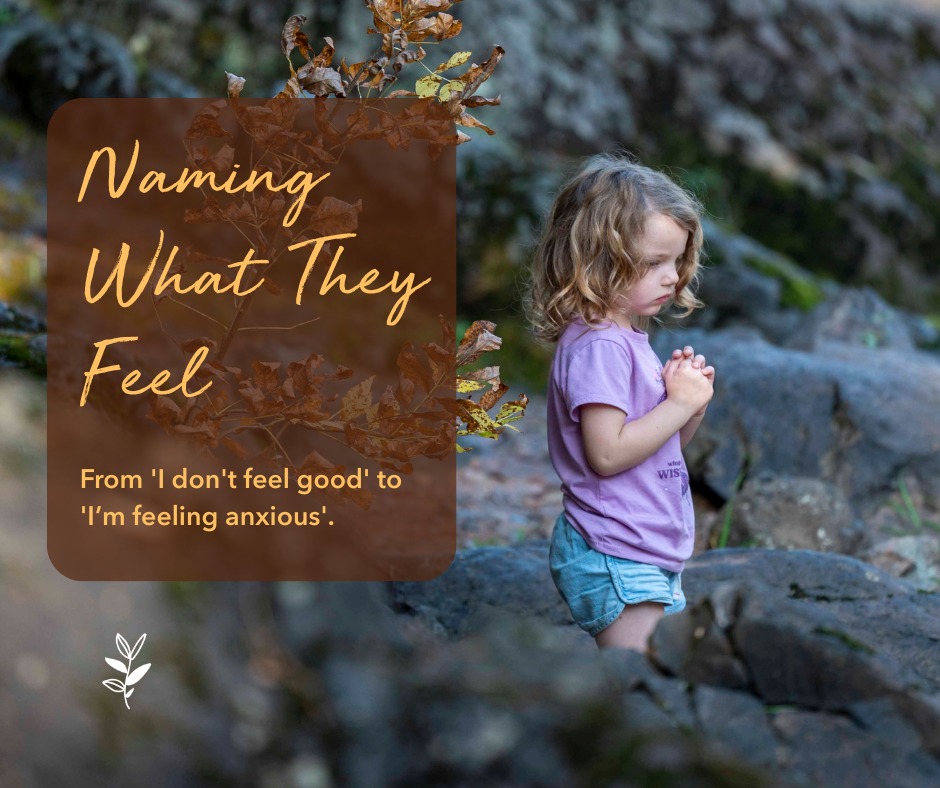
Not the names of plants (though they know plenty of those too), but language for what’s happening inside their bodies.
“I feel anxious.”
“My throat feels scratchy.”
“My body feels tired.”
Not vague discomfort. Not panic. Just honest awareness.
And here’s what I’ve realized: when kids can name what they feel, they’re no longer powerless inside it.
Before we started using herbs intentionally, my kids would just say “I don’t feel good” or “something’s wrong.” Which is normal for young kids, but it doesn’t give them much to work with.
Now they have words. Specific words. And those words give them power.
When my son can say “my stomach feels upset” instead of just melting down, he’s already halfway to figuring out what might help. Maybe he needs ginger tea. Maybe he needs to slow down and breathe. Maybe he just needs to sit with it for a minute.
But he’s not stuck. He’s not spiraling. He’s observing and naming. And that alone brings relief.
This is what emotional literacy looks like in practice. It’s not perfect, but it’s better.
Herbal care creates natural opportunities for kids to check in with their bodies and put words to what they’re experiencing. And the more they practice, the better they get at it.
“I feel nervous about the dance recital tomorrow.”
“My legs are sore from ninja”
“I’m really tired today.”
These aren’t dramatic statements. They’re just honest. And that honesty, that ability to name what’s real without exaggerating or minimizing it, is a skill that will serve them far beyond herbs.
It’ll serve them in friendships, in conflict, in managing stress as adults. Because people who can name what they feel can also ask for what they need.
And that’s one of the most valuable things we can teach our kids.
Lesson 5: Gentleness is Not Weakness
Our kids are learning that care doesn’t have to hurt to work.

Not everything needs to sting, burn, or shock the body into submission. Gentle support is still real support.
This lesson feels especially important in a world that often equates harshness with effectiveness.
We see it everywhere. “No pain, no gain.” “Push through it.” “Tough it out.” These mantras have a place in the world, but we need to be careful. We need to watch the idea that if something isn’t aggressive or uncomfortable, it’s not really working.
I’m teaching my kids the difference and the reality of both.
They’re learning that chamomile can calm without forcing sleep. That lemon balm can ease anxiety without numbing them out. That body butter can heal dry skin without stinging or burning. And the power of tallow to nourish and repair skin, and even heal scars.
They’re learning that healing doesn’t have to be a fight. It can be a conversation. A collaboration. A gentle nudge in the right direction instead of a sledgehammer.
And here’s what I’ve noticed: this changes how they relate to their bodies.
When kids learn that care can be gentle, they stop bracing against it. They stop seeing their bodies as enemies that need to be controlled or overridden.
Instead, they see their bodies as partners. And this is important. To see their bodies as systems that are doing their best and sometimes need a little support – not punishment, not force, just support.
That shift matters. It builds a foundation of trust that will carry them through so much more than childhood colds and scratched knees.
It’ll carry them through stress, through hard seasons, through moments when their bodies feel like they’re betraying them. Because they’ll remember: gentleness is not weakness. It’s wisdom.
Gentle care can be just as effective as harsh intervention. Sometimes even more so, because it works with the body instead of against it.
And that’s a lesson I’m grateful my kids are learning young.
Lesson 6: We Respect the Plants
My son asked me the other day how long it takes for echinacea to grow before we can use it.
The answer surprised him: years.
And that one question opened up a conversation I didn’t expect.
We talked about how echinacea roots need at least two or three years, sometimes longer, before they’re mature enough to harvest. How farmers and herbalists wait patiently, tending the plants, watching them grow, knowing they won’t see a return on that work for years.
We talked about how that’s different from walking into a store and grabbing a bottle of something synthetically made off the shelf without thinking about where it came from.
And we talked about why that matters.
Herbal care isn’t about consumption; it’s about relationship. And my kids are learning gratitude, restraint, and respect alongside every remedy.
When we use echinacea now, they think about those years of growth. They think about the people who cultivated it. They understand it’s not unlimited, and that changes how they use it.
We teach them not to waste. We try to make sure they know not to take more than they need just because it’s available.
When my son reaches for catnip, he doesn’t dump half the bottle into his water. He uses what he needs. And when it runs out, we talk about how long it takes not only to let the herb extract into the tincture, but the harvest it took to get it here.
This teaches stewardship, not entitlement.
It teaches them that the natural world isn’t just here for us to consume without thought. That resources take time to grow, and people work hard to cultivate and prepare them well.
We believe God designed plants with purpose. That creation is ordered and intentional, and that plants can support the body in ways that honor how we’re made.
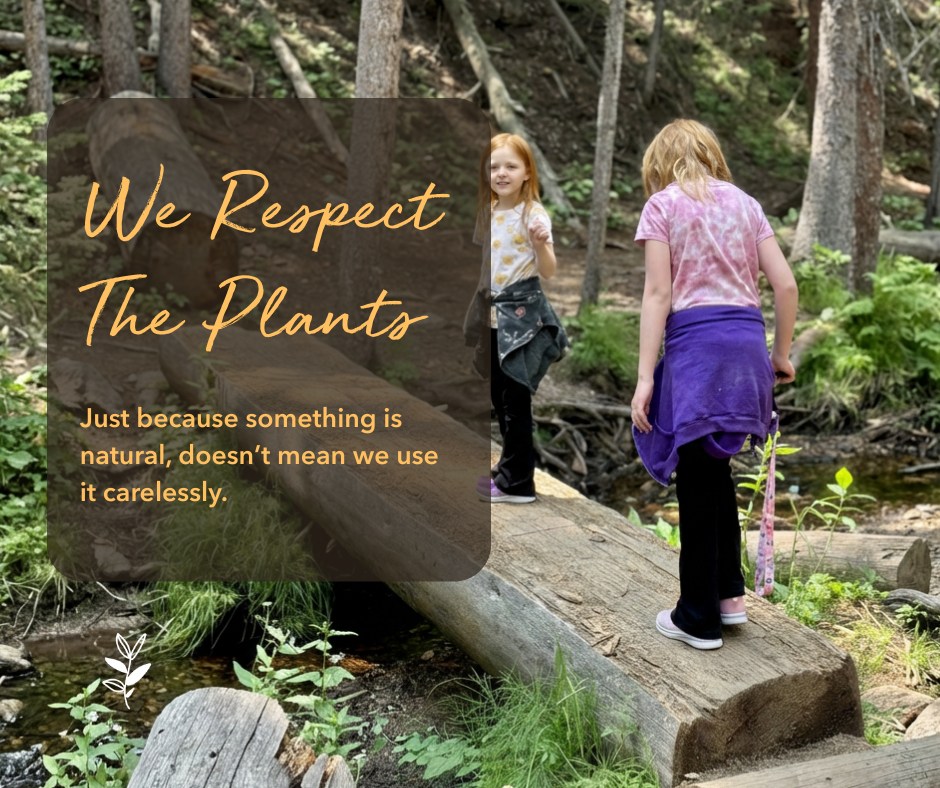
But we also teach our kids that just because something is natural doesn’t mean we use it carelessly.
This lesson applies to so much more than herbs.
It applies to food. To how we treat the land. To how we use what we’ve been given without assuming there’s always more where that came from.
Herbal care has given my kids a framework for thinking about relationship instead of just consumption. It’s something that as I’m teaching them, I’m reminding myself of these values. Something I think more of the world needs reminding of, too.
Lesson 7: We Still Use Doctors
We’ve been talking a lot about herbs. I want to be really clear about something: herbs are great. But they’re not replacements for doctors, and we’ve never treated them that way.
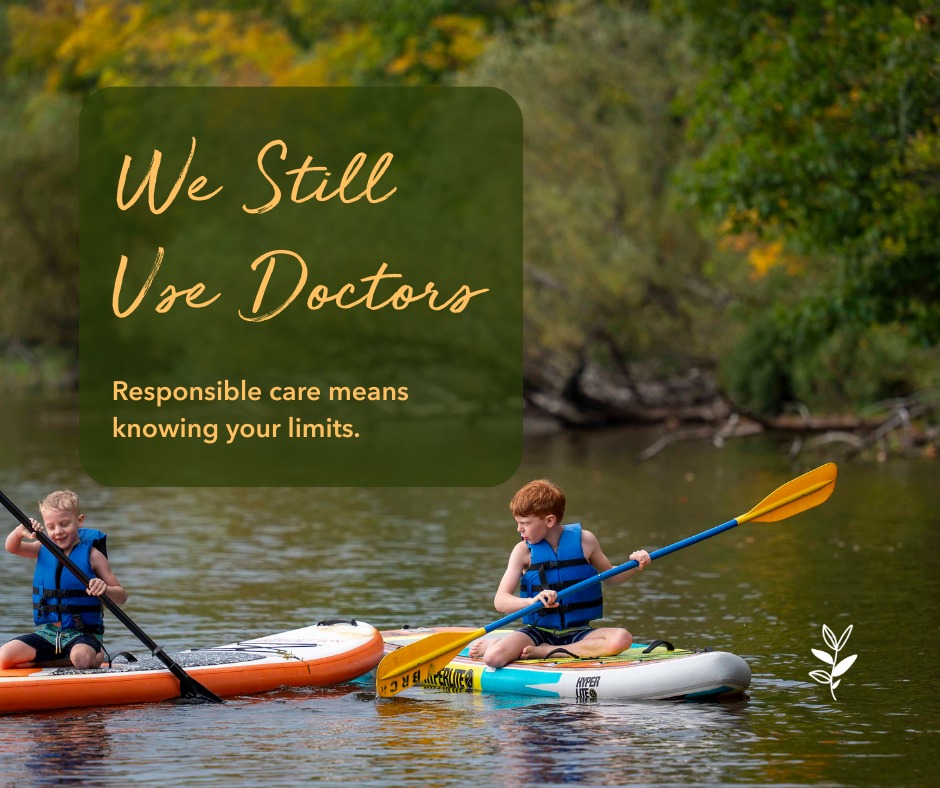
Herbal care doesn’t replace modern medicine in our home; it lives alongside it.
My kids know that sometimes rest is enough. Herbs are supportive, but sometimes we need extra help from doctors, tests, or intervention.
That balance is part of responsible care. There’s no fear here, just discernment.
This entire post has been talking about what herbal care has taught our kids. The awareness, the language, the gentleness, the stewardship. All of that is true, and all of that matters.
But here’s what else is true: herbs aren’t an end-all fix. And they’re not meant to replace modern healthcare.
When my daughter broke her collarbone, we didn’t reach for arnica and call it good. We went to the doctor. She got an X-ray. She got a sling.
There is a time and place for medical intervention, and it’s important we recognize that.
Herbal care has given my kids tools. But it hasn’t made them, or me, medical experts.
We use herbs when they’re appropriate. When the body needs gentle support and time to do what it knows how to do. When we’re dealing with everyday discomforts, minor complaints, or long-term wellness.
But we also know when to step back and say, “This is beyond what we can handle at home.”
That’s not weakness. That’s wisdom.
This is what responsible herbal care looks like.
It’s not about rejecting everything modern medicine offers out of fear or ideology. It’s not about making herbs into something they’re not.
It’s about knowing when support is enough, and when more is needed.
It’s about asking questions. Doing research. Trusting yourself and your body while also recognizing your limits.
It’s about teaching our kids that using herbs doesn’t mean we distrust doctors. It means we have more tools in the toolbox, and we use the right tool for the job.
Sometimes that’s chamomile tea and a good night’s sleep. Sometimes it’s an appointment with a doctor and maybe a blood test to verify everything is okay.
Both have their place. And teaching my kids to discern the difference, without fear, without rigidity, just with honest awareness, is one of the most important things I can do.
Balance. Discernment. Responsibility. That’s what we’re teaching.
Lesson 8: Confidence Without Fear
Earlier this year, my son woke up with a sore throat. Just a handful of years ago, that would have meant panic. “Is it strep? Do I need to stay home? What if it gets worse?”
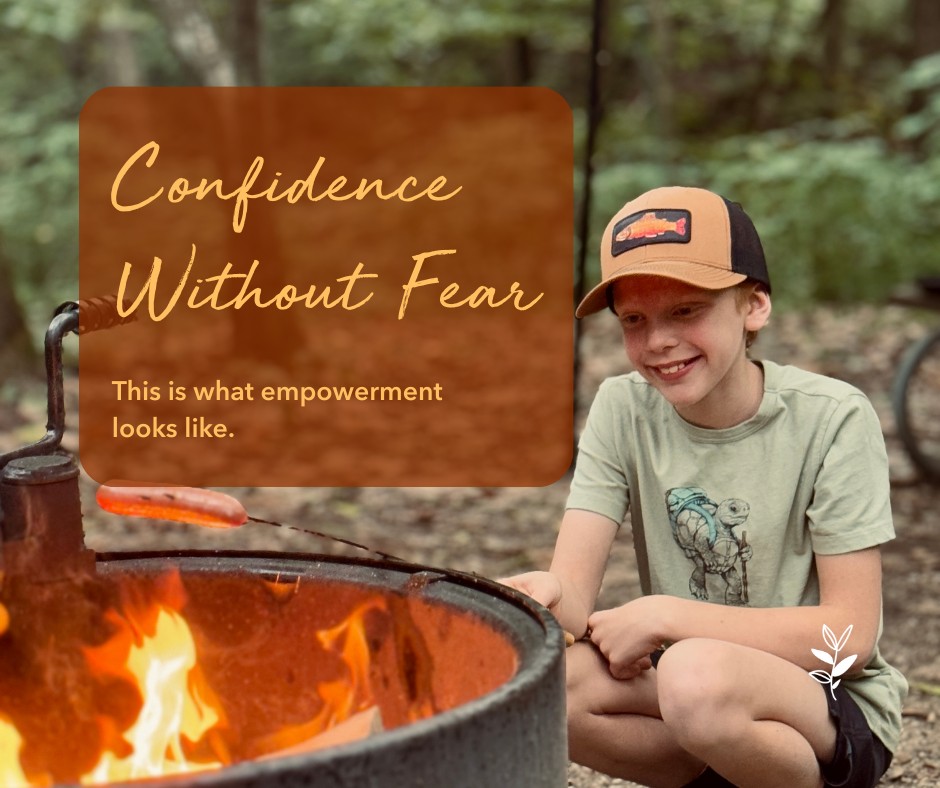
Instead of us both freaking out, he walked into the kitchen, told me his throat felt scratchy, and calmly asked if we had some marshmallow root tincture. No drama. No spiral. Just awareness and action.
That shift didn’t happen overnight. It happened because of everything we’ve been talking about.
This is what the last week has been building toward.
All the lessons we’ve covered – listening before fixing, understanding support vs. suppression, using less rather than more, naming what they feel, choosing gentleness, respecting the plants, and knowing when to use doctors – all of it has built something deeper than just knowing which herb does what.
It’s built confidence.
My kids don’t panic when something feels off anymore. They check in. They ask questions. And they participate in their care.
When my son feels anxious before a ninja competition, he doesn’t shut down or try to push through it. He recognizes it. He asks for catnip. He understands that his body is responding to stress, and that’s normal. There isn’t anything wrong with him. He’s not broken. And there are gentle ways to support himself through it.
That’s empowerment.
Not because they never feel uncomfortable. Not because herbs fix everything instantly. But because they know how to observe, assess, and respond with intention instead of panic.
They trust their bodies, and they trust the process. They’re learning to trust that most things their bodies do aren’t emergencies; they’re signals. And signals can be listened to, not just overridden.
This confidence didn’t come from ignoring symptoms or pretending everything is fine.
It came from learning how to listen. How to support. How to respond thoughtfully instead of reactively.
It came from practicing these skills over and over. All the small things, everyday discomforts, minor complaints add up so that when something bigger does happen, they have a foundation to stand on.
They know the difference between “this needs attention” and “this needs emergency care.” They know when to reach for gentle support and when to ask for help.
They know their bodies aren’t betraying them every time something feels uncomfortable.
And that may be the greatest gift herbal care has given our family.
Not a cabinet full of tinctures. Not perfect health. Not some idealized version of wellness.
Just kids who feel empowered in their own bodies. Who can participate in their own care without fear or dependence. Who are learning to trust themselves while also knowing their limits.
Where to Start
If you’re reading this and thinking “I want this for my kids,” here’s where to begin:
Start with listening. Before you buy a single herb, practice the pause. When your child says “I don’t feel good,” ask them to describe it. What does it feel like? Where do you feel it? When did it start? This alone builds awareness.
Keep it simple. Don’t start with a dozen different herbs. Pick 1-2 that address common complaints in your house. Chamomile for calm. Ginger for upset stomachs. Elderberry for immune support. Learn those well before expanding.
Focus on single herbs, not blends. Especially when you’re starting. This helps you and your kids see what’s actually working.
Talk about it. Don’t just give them herbs – explain why. “This is chamomile. It helps your body calm down when you’re feeling wound up. Let’s try a little and see how you feel in 20 minutes.”
Know your limits. Herbal care is wonderful for everyday support. It’s not a replacement for medical care when something is beyond your scope. Trust your instincts.
Be patient. This isn’t about overnight transformation. It’s about building skills, awareness, and confidence over time.
The Real Gift
This week wasn’t about making your kids into mini-herbalists.
It was about giving them tools to trust their bodies – without fear, without dependence, just with honest awareness.
It was about teaching them that their bodies aren’t problems to solve. That gentle care works. That they have power in their own healing. That stewardship matters. That balance is wise.
And maybe most importantly, it was about teaching them to pause, listen, and respond with intention instead of panic.
That’s what growing kids herbal-aware really means.
And it’s one of the greatest gifts we can give them.