Bug Season Is Here. Here Is How We Handle It Naturally.
Summer in the Midwest is glorious. Long days, warm evenings, kids outside until dark. And then the bugs show up, and suddenly everyone is retreating inside or dousing themselves in whatever is under the bathroom sink.
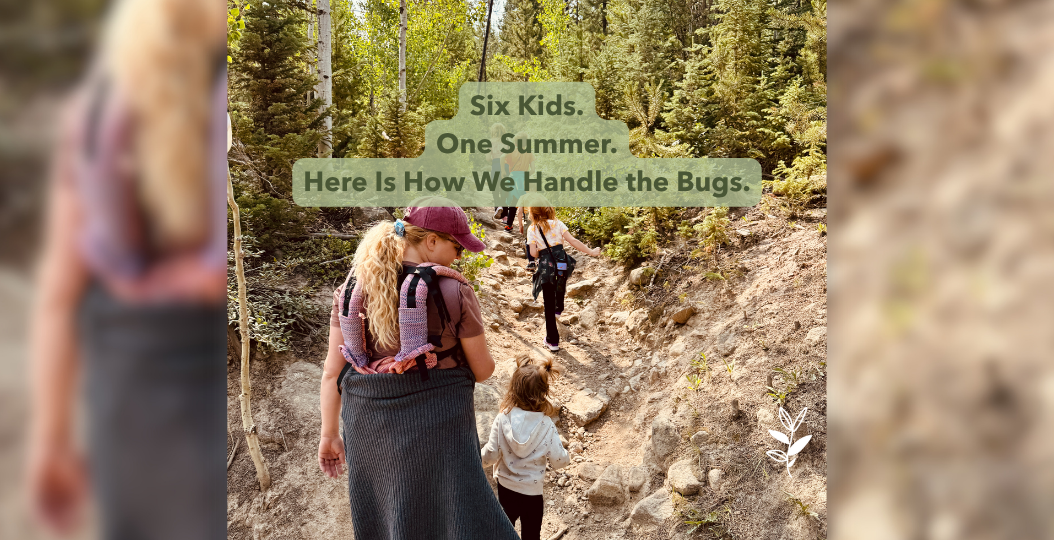
We have six kids. Bug season is not a casual concern in our house. It is a logistical challenge that starts in late spring and does not let up until October. Over the years, we have thought a lot about how we approach it, what we put on our kids’ skin, what actually works, and whether the conventional answer is the only answer.
This blog is what we have learned. Not a sales pitch. Just an honest, practical guide to keeping bugs at bay this summer in a way that does not make you trade one problem for another.
Know Your Enemy First
Before you reach for any repellent, it helps to understand what you are actually dealing with. Different bugs are drawn to different things and are most active at different times. That knowledge alone can dramatically reduce your exposure without putting anything on your skin at all.
Mosquitoes are attracted to carbon dioxide, body heat, sweat, and certain skin bacteria. They are most active at dawn and dusk, though some species are aggressive all day. Standing water is where they breed, even in small amounts. A bottle cap of water can produce hundreds of mosquitoes. I know, I made the same face you just did.
Ticks do not fly or jump. They wait in tall grass and brush at about knee height and grab onto passing hosts. They are most active in spring and early summer, but can be present any time temperatures are above freezing. Wooded areas and tall grass are their primary habitats.
Gnats and biting midges are drawn to moisture, decomposing organic matter, and certain fragrances, including some floral scents and sweet smells. They are most problematic in humid, shaded areas near water. This covers most of our state parks!
Minute pirate bugs, those small black biting insects that plague the Midwest late summers, are a different category entirely. They bite out of curiosity rather than feeding on blood and are most active during fall harvest when they are displaced from agricultural fields. They are notoriously difficult to repel with conventional methods. And while we have tested our products against this, nothing is going to be 100% effective against these buggers.
Understanding what you are dealing with helps you make smarter decisions about when, where, and how to protect yourself.

Start Before You Spray
The most effective bug prevention does not come from a bottle. It comes from a few habits that reduce your exposure before repellent even enters the picture.
Time your outdoor activities. Mosquitoes are most active at dawn and dusk. If you can shift outdoor activities to mid-morning or early afternoon, you reduce exposure significantly without doing anything else.
Eliminate standing water. Birdbaths, clogged gutters, kids’ toys, flower pot saucers, any container that holds water is a mosquito nursery. Empty them weekly. This single habit reduces your local mosquito population more than almost anything else.
Dress strategically. Lightweight long sleeves and pants in light colors reduce exposed skin dramatically. Ticks are especially looking for exposed skin to grab onto. Tucking pants into socks when hiking in wooded areas is the single most effective tick prevention strategy that exists. If you lean into the aesthetic, it’s totally a vibe. Ha!
Avoid peak fragrance. Certain floral perfumes, heavily scented lotions, and sweet-smelling products attract mosquitoes and gnats. Going fragrance-light on outdoor days makes a real difference. This seems counterintuitive for us, given that we create a lot of products in the space. But the fight against bugs is worth noting this detail. Just put on the delicious Magnolia scent once you come in for the day. 😊
Fans work. Mosquitoes are weak fliers. A simple outdoor fan on your porch or patio disrupts their ability to land on you. For minute pirate bugs specifically, a fan is one of the most effective deterrents available. Besides, who doesn’t want a slight breeze in our sticky Midwest humid summers?
These are your first line of defense. Repellent fills the gaps when these measures are not enough, which they often are not, especially with kids who are not going to stay out of the tall grass.
When a genuinely effective natural alternative exists, choosing it is not fear. It is just a reasonable decision for our family.
— Brittany sopko
Founder & Herbalist at juniper apothecary
The DEET Conversation
DEET (N,N-Diethyl-meta-toluamide) has been the benchmark insect repellent since the United States Army developed it in the mid-1940s. It is effective. Genuinely, reliably effective at repelling mosquitoes, ticks, and most biting insects. We are not going to pretend otherwise.
But we are also not going to pretend we have no questions about it.
DEET is a pesticide. That’s not a typo. When applied to skin, it is absorbed into the body. DEET that is taken into the body can be found in the blood up to 12 hours after application, where it is broken down by the liver and eliminated primarily through urine.¹ The EPA has reviewed it and considers it safe when used as directed. The CDC recommends it. The mainstream position is that for most adults, the risk-benefit calculation favors use, especially in areas with significant risk of tick or mosquito-borne illness. Solutions Stores
We respect that position. And in certain situations, high-risk areas for Lyme disease, West Nile, or other serious vector-borne illness, that calculation deserves serious weight. Bugs can carry real risks. Lyme disease is debilitating. West Nile can be severe. We are not dismissing any of that.
Did You Know?
- DEET enters your bloodstream. After topical application, DEET can be detected in the blood for up to 12 hours, where it is processed by the liver before being excreted through urine.¹
- Emerging research is raising flags for kids. A 2025 peer-reviewed study analyzing 864 children and adolescents found associations between DEET exposure and disrupted sex hormones and reduced bone mineral density. Children under 12 showed the greatest sensitivity.²
- The last major safety review was over a decade ago. The EPA’s most comprehensive DEET review was completed in 2014. Long-term cumulative exposure data across childhood development stages remains incomplete.³
These are systems that are actively developing in kids. The researchers called for heightened public concern and further investigation. But the research is new, and nothing has been done to raise awareness or further the conversation yet.
The long-term cumulative data on repeated childhood exposure across developmental stages simply does not exist yet in meaningful form. And that gap, combined with the emerging signals, is enough for us to want a different option for our kids.
We don’t know what we don’t know. History has shown us enough times that “no definitive proof of harm yet” and “proven safe” are not the same thing. When a genuinely effective natural alternative exists, choosing it is not fear. It is just a reasonable decision for our family.
How Plant-Based Repellents Actually Work
Natural bug repellents are not wishful thinking. The botanicals with the strongest evidence behind them work through real, documented mechanisms. Here is what the science actually says about the ingredients we use.
Catnip (Nepeta cataria) is the ingredient that surprises people most. Yes, it is the same plant your cat loses its mind over. But the active compound, nepetalactone, is a serious mosquito deterrent. Catnip repels insects by triggering a chemical receptor called TRPA1 that creates sensations similar to pain or irritation, causing mosquitoes and other insects to flee.³ Multiple peer-reviewed studies have found that catnip herbal infusions achieve greater than 95 percent mosquito repellency under laboratory conditions.⁴ Some researchers have described nepetalactone as comparable to DEET in repellent activity while carrying a significantly more favorable safety profile. ScienceDirect
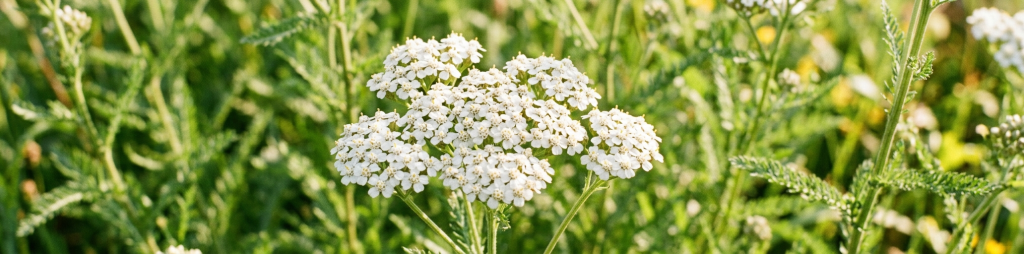
Yarrow (Achillea millefolium) has been used for protection and wound healing for literally thousands of years, its Latin name Achillea referencing the Greek warrior Achilles, who was said to have used it to treat soldiers’ wounds. As an insect repellent, laboratory tests showed that yarrow extract exhibited similar repellency to DEET as a reference substance against Aedes aegypti mosquitoes.⁵ Yarrow has also been studied for acaricidal activity against ticks, which is particularly relevant for Midwest families.⁶ nih
Cedarwood, eucalyptus, lavender, geranium, and lemon essential oils each bring their own repellent properties to the formula. Eucalyptus in particular has one of the strongest research bases for mosquito repellency. Combined, they create a broad-spectrum aromatic barrier that insects find genuinely deterring.
Witch hazel serves as the carrier base, providing its own mild astringent properties while delivering the botanical actives evenly across the skin.
The formula works because each ingredient brings something real to the table. This is not aromatherapy hoping for the best. These are plants with documented repellent mechanisms working together.
A note on citronella…
You might be wondering why citronella is not on our ingredient list. It is one of the most well-known natural insect repellents in the world, and it genuinely works. We know that.
This was intentional, not an accident. We left it out on purpose.
Citronella is polarizing in a way that most essential oils are not. The scent is strong, distinctive, and for a lot of people, it triggers an immediate association with those smoky tiki torches from backyard parties in the nineties and early 2000s. Beyond personal preference, a meaningful number of people experience skin sensitivity and scent reactions to citronella, particularly in higher concentrations.
We wanted a formula that people would actually reach for and enjoy using, not one they tolerate because it keeps the bugs away. Our customers have consistently told us they appreciate not smelling like a citronella candle from 1997.
The combination of catnip, yarrow, cedarwood, eucalyptus, lavender, geranium, and lemon gives us the broad spectrum coverage we need without the scent baggage. We are confident the formula more than holds its own without it.
Being Honest About Natural Repellents
We are not going to oversell this. There are real differences between plant-based and synthetic repellents, and you deserve to know what they are before you decide.
Reapplication matters more. Essential oil-based formulas do not last as long as DEET-based products. Plan on reapplying every one to two hours during active outdoor exposure, and immediately after swimming or heavy sweating. This is the biggest practical difference, and it is worth knowing upfront.
Concentration of bugs matters. For a casual backyard evening, natural repellent is completely adequate. For a high-density mosquito environment or a known tick-heavy area, reapplication discipline becomes more important.
It smells like plants. This is not a complaint from most people (the phrase ‘it’s not a bug, it’s a feature’ came to mind for this section, but it felt like too much of a pun, ha!), but it is different from conventional bug spray. The cedarwood and eucalyptus are noticeable, and most people find the scent pleasant.
It is not the right choice for every situation. If you are traveling to a region with an active risk of serious mosquito-borne illness, that risk calculation is different and deserves a separate conversation with your doctor. For everyday Midwest summer use, it is a completely legitimate and effective option.
Natural is not automatically better in every scenario. But in this case, for our daily summer use with six kids, the evidence behind the ingredients and the unknowns around conventional alternatives make it an easy choice for us.
Practical Tips for the Whole Summer
A few things we have learned after years of navigating bug season with a lot of kids:
- Apply before you go outside, not after the first bite. Repellents work best when applied proactively and given a few minutes to settle on the skin.
- For kids 2 and up, apply directly to skin. For babies 6 months and up, apply to clothing rather than skin. Avoid hands and faces on young children.
- Do tick checks after any time in wooded or tall grass areas. Check hairlines, behind ears, under arms, and behind knees. Make it a routine rather than a reaction. Just because our spray protects against ticks doesn’t mean one didn’t climb aboard anyway. Do a tick check; it’s worth it.
- Keep a bottle in your bag, your car, and by the back door. The repellent that works is the one you actually reach for. Accessibility matters.
- And when you forget and the bugs win, that is what our Itch Eraser is for. Nettle, chickweed, and calendula-infused olive oil in a mess-free twist-up stick. Bug bites, rashes, mystery itches. It handles all of it.
A Note on Our Products
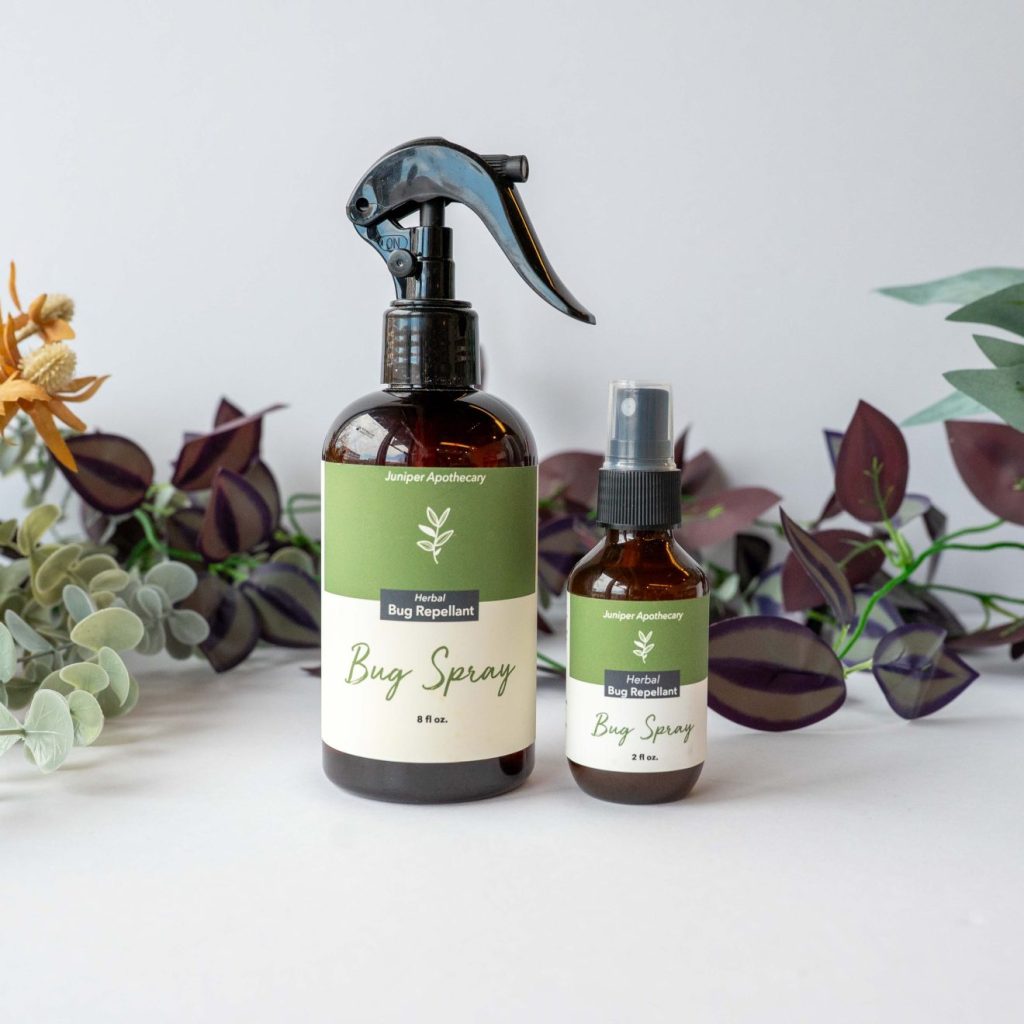
Our Bug Spray is plant-powered and formulated for real outdoor use. Yarrow and catnip tinctures are the active botanical base, combined with witch hazel and a blend of cedarwood, eucalyptus, lavender, geranium, and lemon essential oils. No synthetic pesticides. No harsh chemicals. Effective for mosquitoes, gnats, and biting insects.
Available in 2oz for your bag and 8oz for home use.
Find it here.
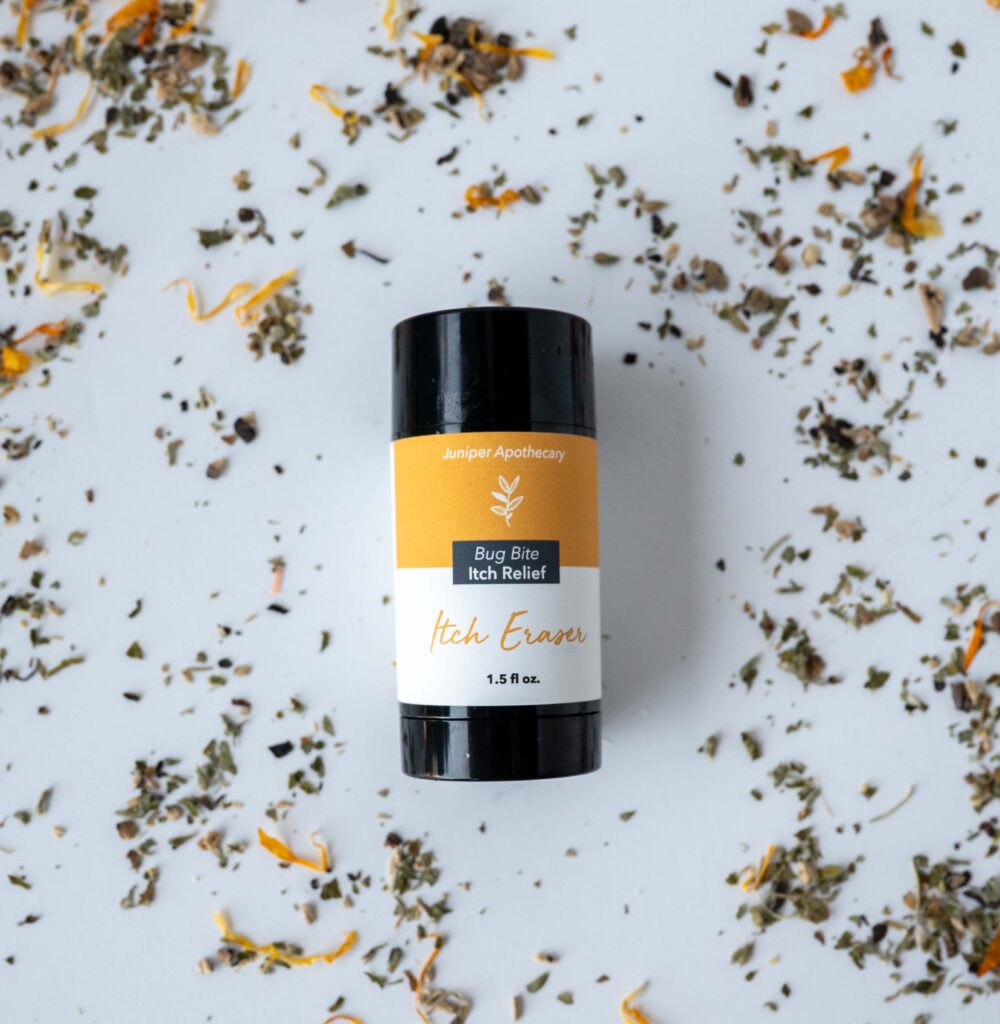
And because sometimes you forget the bug spray, or the bugs just win anyway, our Itch Eraser is what we reach for when the bites happen. Nettle, chickweed, and calendula infused olive oil in a mess-free twist-up stick, rounded out with beeswax, lavender, and tea tree essential oils. It erases bug bite itch fast, but its usefulness does not stop there. Eczema flares, mystery rashes, dry irritated patches, contact reactions, that random itch that shows up from nowhere in the middle of the night. It handles all of it. We keep one in every bag, one by the back door, and one next to the Band-Aids. Once it is in your house, it does not leave. A two-year-old customer asks for it by name, mispronounced adorably, every time she feels itchy. That is the kind of product endorsement we will take every time.
Available in a 1oz twist-up tube. Find it here.
References
- National Pesticide Information Center. DEET General Fact Sheet. Available at: npic.orst.edu/factsheets/DEETgen.html
- Zeng et al. From repellent to risk: DEET’s adverse effects on hormones and bone health in kids. International Journal of Environmental Research and Public Health. 2025. Available at: sciencedirect.com/science/article/pii/S2090123225001973 (Verify full citation details before publishing)
- Ueda H, et al. Catnip repels insects via the TRPA1 channel. Current Biology. 2021. As reported in Science News, March 4, 2021. Available at: sciencenews.org/article/how-catnip-plant-repels-insects-mosquitoes-chemical-receptor
- Schultz GW, et al. Repellency Assessment of Nepeta cataria Essential Oils and Isolated Nepetalactones on Aedes aegypti. PMC. 2019. Available at: pmc.ncbi.nlm.nih.gov/articles/PMC6365536
- Jaenson TGT, et al. Efficacy of plant extracts and oils as mosquito repellents. Phytotherapy Research. 2006. Available at: pubmed.ncbi.nlm.nih.gov/23195905
- Nguyen TT, et al. Common yarrow essential oil as potential repellent and acaricide against Ixodes scapularis and Dermacentor variabilis ticks. PLOS ONE. 2023. Available at: pubmed.ncbi.nlm.nih.gov/36905473