Decoding natural product ingredients.
A guide to ingredient safety and transparency.
Introduction: Why understanding ingredients is important (but isn’t simple)
You want to know what’s going on your skin and in your body. That’s smart. That’s responsible. That’s you taking ownership of your health.
But here’s the truth: ingredient safety isn’t black and white.
There isn’t a single authority or database, not a certification, not even a regulatory agency, that can tell you with absolute certainty that an ingredient is 100% safe or 100% harmful. Safety is relative. It depends on your body, your sensitivities, your allergies, and sometimes even the concentration of the ingredient or how it’s used in a formula.
We didn’t write this blog post to tell you what to do. We wrote it to give you the tools to make informed decisions for yourself and your family.
How Ingredient Lists Actually Work
Before we dive into specific ingredients, let’s cover the basics of how to read a label.
Ingredients are listed in order from most to least by weight. The first ingredient makes up the largest portion of the product. The last ingredient is present in the smallest amount.
Sometimes botanical names appear alongside (or instead of) common names. This is why you’ll see things like Calendula officinalis instead of just “calendula.” It’s the standardized way to identify plants across different languages and regions.
Placement on the label matters – but it’s not everything. Just because an ingredient is toward the end of the list doesn’t automatically mean there isn’t enough of it. It could mean the ingredient is effective in a lower concentration. But if the majority of the product is made up of cheap fillers and the active ingredient you’re paying for is barely there? That’s worth questioning.
Watch for vague terms. “Fragrance,” “parfum,” “naturally scented,” or “proprietary blend” without further clarification can be red flags. These catch-all terms can hide dozens (or even hundreds) of undisclosed chemicals.
Where to Start: The EWG (With Caution)
When we’re researching ingredients, we start with the Environmental Working Group (EWG) Skin Deep database.
The EWG rates ingredients and products on a scale from 1-10:
- 1-2 (Green): Low hazard
- 3-6 (Yellow): Moderate hazard
- 7-10 (Red): High hazard

The database also shows a “data quality” rating, which reflects how much research supports the score. A rating based on one study is weaker than a rating based on dozens.
It’s a helpful starting point. You can search an ingredient, see its rating, and get a quick sense of potential concerns.
But – and this is important – the EWG isn’t perfect.
Here’s what you need to know:
Concerns about bias and methodology:
The EWG has been criticized for cherry-picking data – focusing on single concerning studies while ignoring the bulk of safety research that shows no issues.1
Some ingredient ratings don’t account for chemistry. For example, sodium cocoyl sulfate and sodium lauryl sulfate are chemically very similar, but EWG rates them differently.2
The database allows consumer submissions with limited staff to verify accuracy, which can lead to errors.3
The EWG Verified program is pay-to-play:
Brands pay $200 to several thousand dollars for EWG Verified certification.4
Having the seal doesn’t mean a product is safer than one without it – it just means the brand paid for certification.
Affiliate revenue creates a conflict of interest:
EWG earns money through Amazon and Google affiliate programs – even on products they rate 9-10 (most dangerous).56
Bottom line: Use the EWG as a starting point for research, not the final word. Cross-reference with other sources. And remember that ratings don’t account for concentration, formulation context, or your individual body.
Our Approach at Juniper Apothecary
We evaluate every ingredient we use. And we don’t rely solely on databases to make those decisions.
Our herbs: We trust them 100%. We source organic and sustainably harvested herbs whenever possible. We prioritize private farms in the United States. We use certified organic when we can. These are the foundation of everything we make, and we don’t compromise on quality.
Where it gets more complicated: Carrier oils, emulsifiers, and preservatives.
These ingredients are necessary for creating the variety of shelf-stable products you expect from a retail brand. A home crafter making small batches for personal use can skip preservatives and work with shorter shelf lives. We can’t. Our products need to be safe and effective for up to a year after you purchase them.
That means we need emulsifiers to blend oil and water in lotions and creams. We need preservatives to prevent mold, bacteria, and spoilage in water-based products. And we need to choose these ingredients carefully.
We evaluate each one individually. We don’t just check a database and move on. We research. We test. We make informed decisions based on science, safety data, and our own formulation philosophy.
Key Ingredient Categories to Know
Let’s break down the most common types of ingredients you’ll see on labels – and what to look for.
Herbs & Botanicals
Generally safe, but source matters. Look for organic, sustainably harvested, and ethically sourced. Even natural ingredients can cause allergic reactions in some people, so pay attention to how your body responds.
Carrier Oils
Common ones include coconut oil, olive oil, jojoba, sweet almond, and grapeseed oil. Look for cold-pressed, organic, and unrefined when possible. Be aware of nut allergies if you’re using almond or other nut-based oils.
Emulsifiers
Emulsifiers blend oil and water – they’re what make lotions and creams possible. Without them, the formula would separate. Common emulsifiers include emulsifying wax, cetearyl alcohol, and polysorbate.
We use Olivem 1000 and emulsifying wax in our formulations. These are not inherently dangerous – they’re functional ingredients that serve a specific purpose.
Preservatives
This is where people get nervous. But here’s the reality: water-based products need preservatives to be safe. Without them, mold and bacteria can grow, which is far more dangerous than a well-chosen preservative.
Natural preservatives include leucidal (radish root ferment), rosemary extract, and grapefruit seed extract. However, many natural preservatives only extend shelf life by 1-3 months, which isn’t sustainable for retail products.
We use Leucidal (a natural radish root ferment preservative) in our water-based products. It keeps products shelf-stable for about one year while maintaining our commitment to cleaner ingredients.
Benzyl alcohol is another common preservative, but it’s not generally regarded as safe and we avoid it.
Synthetic preservatives like parabens and phenoxyethanol are widely used in conventional products. Parabens have been the subject of debate for years – they’re not as dangerous as some marketing would have you believe, but they’re also not necessary. There are better options available.
Preservative-free products only work for anhydrous (no water) formulas like balms, or products with very short shelf lives. If a lotion or cream claims to be preservative-free, be skeptical – or use it quickly.
Fragrance
Fragrance is one of the most controversial ingredient categories.
Synthetic fragrance can contain phthalates and parabens, which are legitimately concerning. “Fragrance” or “parfum” as a catch-all term can hide hundreds of undisclosed chemicals.
Essential oils are natural, but they can still cause skin irritation or allergic reactions in some people.
“Clean fragrance” is phthalate-free and paraben-free, but not everyone agrees on what qualifies as “clean.”
Here’s our take: Some people avoid fragrance entirely – and that’s completely valid. We make plenty of unscented products for that reason.
But some people love scent. And for people transitioning from conventional products to cleaner body care, fragrance can make that switch easier.
When we use fragrance, we make sure it’s phthalate-free and paraben-free. We use a 5:1 ratio of essential oils to clean fragrance, so you’re still getting the therapeutic benefits of the oils.
That said, we know not everyone agrees. Some people believe there’s no such thing as “clean fragrance,” and that’s okay. If that’s you, stick with our unscented or essential-oil-only options.

We meet people wherever they are. No judgment. Just options.
Brittany sopko
Juniper Apothecary Founder
Red Flags vs. Green Flags
Red Flags:
- “Fragrance” or “parfum” with no clarification about what’s in it
- Ingredients you can’t find any information on (even after Googling)
- Extremely long ingredient lists for simple products (why does a bar of soap need 30 ingredients?)
- No ingredient list at all
- Brands that won’t answer questions or get defensive when asked about their ingredients
Green Flags:
- Transparent ingredient sourcing
- Short, clear ingredient lists
- Organic certifications
- Brands willing to educate and answer questions*
*That last one is key to our mission. We’re in this business to make money and feed our family, yes. But we also genuinely care about our customers and want to help you make informed decisions. That’s why we’re taking the time to write blog posts like this one. Education matters to us.
How to Research Ingredients You Don’t Recognize
Here’s a simple process:
- Google the ingredient name + “cosmetic use” or “skincare”
- Check the EWG Skin Deep database (but remember the caveats we discussed)
- Look for multiple sources – don’t rely on one blog or database
- Consider the source – Is this a fear-mongering blog? An affiliate marketing site? Or a peer-reviewed scientific resource?
Be wary of brands that trash other brands’ ingredient choices.
You’ll often hear certain brands attack ingredients that other natural makers use, claiming they’re horrible, toxic, and dangerous, when the reality is far more nuanced.
That’s a red flag. It creates a toxic, fear-based environment.
There’s more than one way to formulate a product. Each formulator has a philosophy. Brands that don’t recognize this, brands that position themselves as the only “safe” option and trash everyone else, should be avoided.
Good brands educate without fear-mongering. Good brands acknowledge nuance. Good brands respect that different approaches can all be valid.
We make products we’re comfortable using in our family. Products we use on our kids every day. Our philosophy is being educated and aware, and living comfortably with informed decisions. If you don’t like an ingredient in a product, don’t buy it.
Brittany sopko
That’s okay.
Juniper apothecary founder and head herbalist
Trust Your Body
No database, no blog post (including this one), and no certification can tell you what’s safe for YOUR body.
You are the final authority.
Patch test new products. Pay attention to how your skin and body respond – both immediately and over time. If something doesn’t feel right, stop using it.
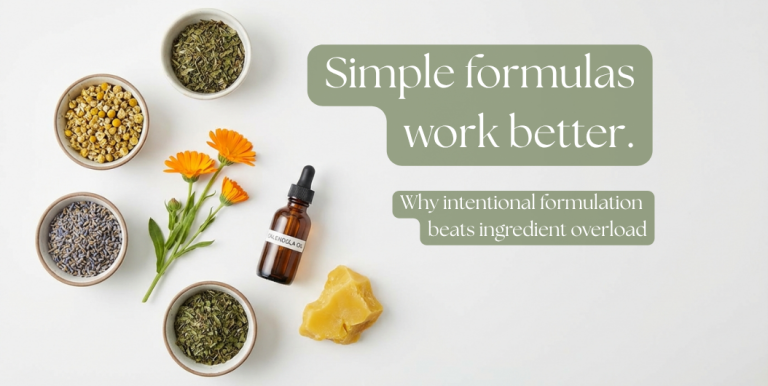
Simple formulas make this easier. When a product has three ingredients, and you have a reaction, you know what to avoid. When a product has thirty ingredients, you’re left guessing.
For more on why we prioritize simple formulas,
check out our blog post:
Educated consumers ask questions. And that’s a powerful thing.
You deserve to know what you’re putting on and in your body. You’re capable of learning to read labels and make informed choices. And you don’t have to do it perfectly. You just have to start.
Start simple. Ask questions. Trust your body.
Footnotes
- The Eco Well – A Case Against the EWG ↩
- Chemists Corner – Why the EWG Skin Deep Database is Still a Dubious Source ↩
- Ann Marie Gianni – Why We Chose MADE SAFE (and Not EWG Verified) ↩
- Fashionista – This Organization Claims to Be a Trusted Source for Beauty Product Safety Guidelines ↩
- Chemists Corner – Why the EWG Skin Deep Database is Still a Dubious Source ↩
- Fashionista – This Organization Claims to Be a Trusted Source for Beauty Product Safety Guidelines ↩