Simple formulas work better. Here’s why.
We get asked a lot why we don’t add this herb or that ingredient to some of our products.
“Have you thought about adding rose hip oil to the face cream?”
“Why don’t you put adaptogens in everything?”
“Wouldn’t lavender make this better?”
The answer is usually the same: because it doesn’t need to be there.
In a world that keeps adding more steps, more products, more ingredients, more everything, we’ve learned to do the opposite. Simple formulas often work better. Not because they’re basic, but because they’re intentional.
When a formula is overloaded with ingredients, it becomes harder to know what’s helping and what’s causing irritation. More ingredients don’t automatically mean more effective results. Sometimes they just mean more confusion.
I’ve been formulating products for over seven years now (which is a wild thought in and of itself), and one of the most important lessons I’ve learned is this: restraint matters just as much as creativity. Knowing what to leave out is just as important as knowing what to put in.
The Problem with Overloaded Formulas
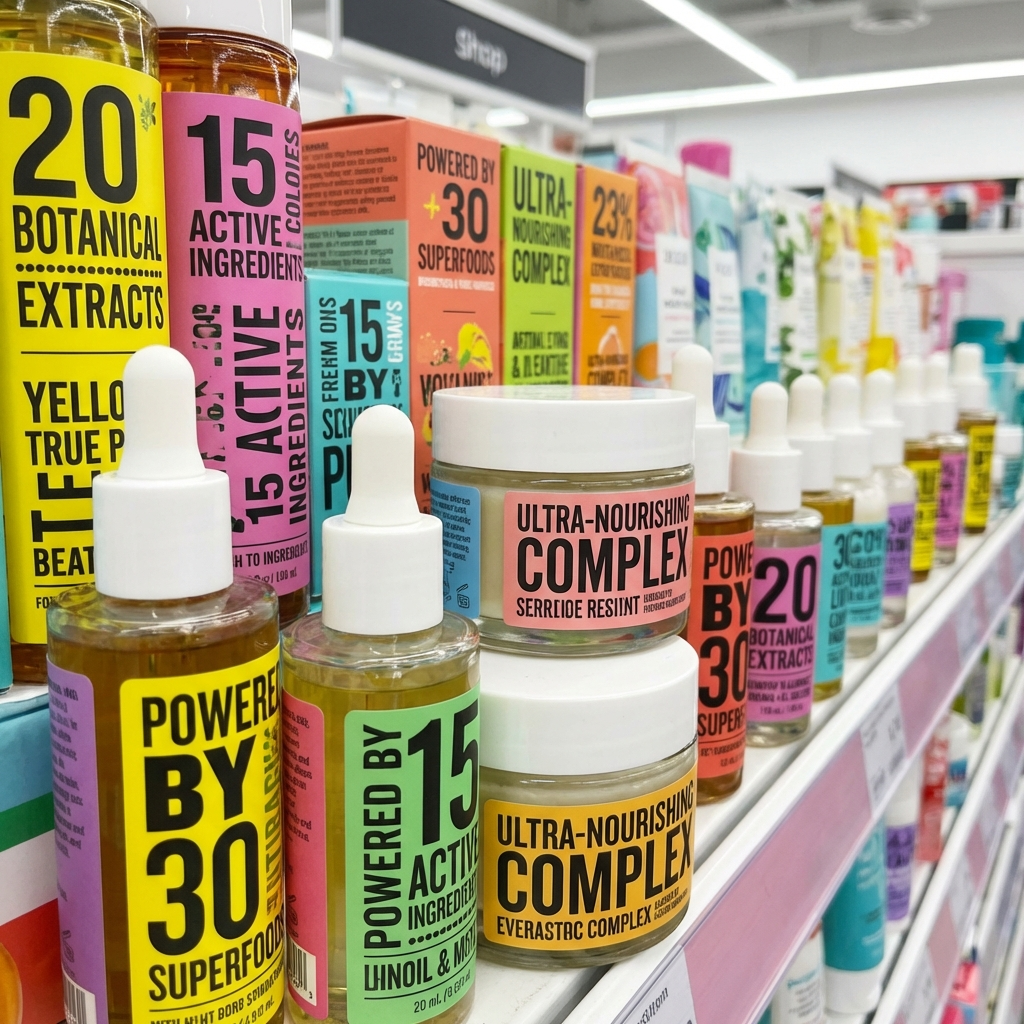
Walk into any beauty or wellness store, and you’ll see products boasting about their ingredient counts. “20 botanical extracts!” “15 active ingredients!” “Powered by 30 superfoods!”
It sounds impressive. It feels like you’re getting more value. But here’s the thing: when a formula has 25 ingredients, and your skin reacts poorly, which one caused the problem?
You don’t know.
And when a formula works really well, which ingredient is doing the heavy lifting?
You still don’t know.
When I’m formulating a new product, restraint matters as much as creativity. I chose ingredients for how they work together.
Brittany Sopko
Founder & Master formulator
Overloaded formulas make it nearly impossible to understand your own body. You’re left guessing. And guessing isn’t empowering. It’s frustrating.
Beyond that, ingredient interactions matter. Some ingredients work beautifully together. Others compete for absorption. Some cancel each other out. Throwing everything into a jar and hoping for the best isn’t a true formulation. It’s a gamble.
And one thing you shouldn’t be gambling with is your health. Period.
What Simple Formulas Allow
Simple formulas give you clarity.
They allow your body to recognize what it’s receiving. They allow your skin to respond without being overwhelmed. And they allow each ingredient to do the specific job it was chosen for.
When you use a product with three ingredients and your skin loves it, you know what worked. When you use a product with three ingredients and you have a reaction, you know what to avoid.
That’s power. That’s control. That’s you learning your body’s language.
Simple formulas also make troubleshooting possible. If something isn’t working, you can remove one thing and know exactly what changed. You can experiment. You can adapt.
Complex formulas don’t give you that option. They keep you dependent on trial and error with no clear answers.
The Formulator’s Perspective: Choosing What Stays (and What Goes)
When I sit down to create a new product, I don’t start by asking, “What can I add to make this look impressive?”
I start by asking, “What does this product need to do? And what’s the simplest way to make that happen?”
Every ingredient has to earn its place. If it’s not serving the formula or if it’s just there to pad the ingredient list or sound fancy, it doesn’t make the cut.
I choose ingredients for how they work together, not for how they look on a label.
Sometimes that means saying no to popular ingredients. Sometimes it means leaving out an herb I love because it doesn’t fit the purpose of the product. Sometimes it means resisting the urge to add “just one more thing” because the formula is already doing what it needs to do.
Restraint is a discipline. And it’s one of the most important parts of formulation.
There’s a quiet confidence in saying, “This is all it needs.” It’s the opposite of the industry standard, which is to keep adding until the label is full and the marketing team is happy.
But I’m not formulating for a marketing team. I’m formulating for you. And for me. I’m formulating with my family in mind. And you don’t need +30 ingredient products. No one does.
INGREDIENT SPOTLIGHT:
Catnip
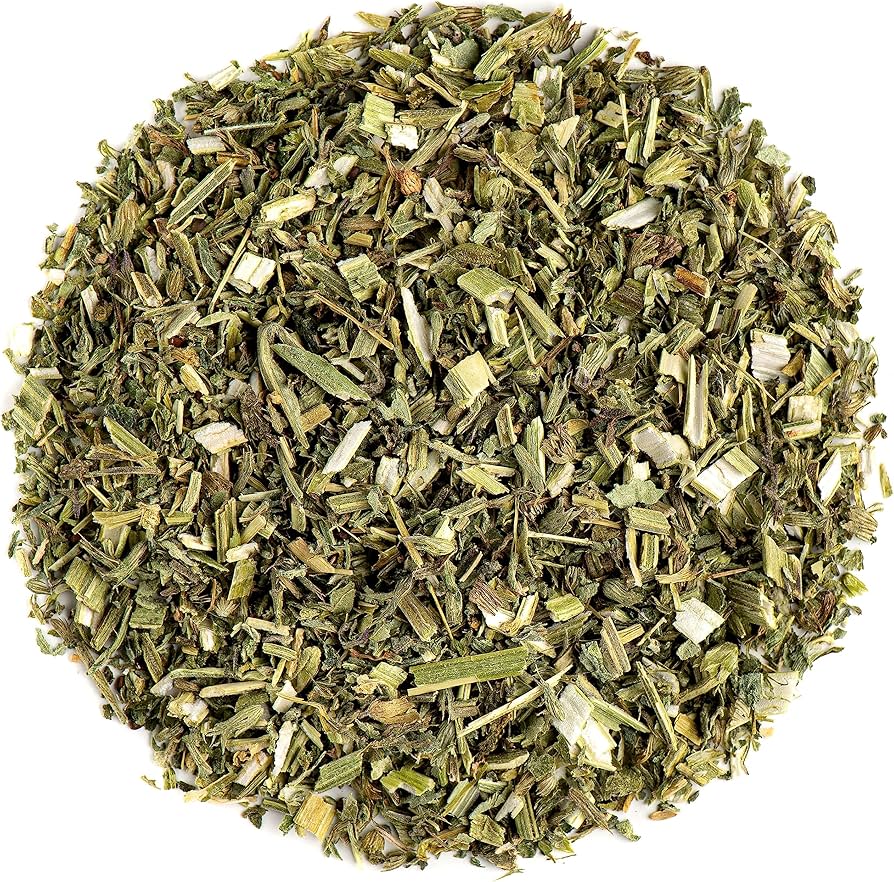
Why we love it: Catnip (Nepeta cataria) is one of our go-to herbs for anxiety, stress, and supporting mental calm. It’s a gentle nervine that helps soothe an overactive mind without making you feel foggy or sedated. We use it for restless kids, anxious adults, and anyone who needs to take the edge off without shutting down. It’s also great for digestive calm and sleep support when tension is keeping you awake.
How we use it: Single-herb tincture, tea blends, and calming formulas. Safe for kids and adults alike.
Single Herbs: The Ultimate “Less is More” Example
This is where the philosophy really comes to life.
We make a lot of single-herb tinctures and teas. Echinacea. Nettle. Lemon Balm. Catnip. One herb. One purpose. Total clarity.
And people ask us all the time, “Why not make more blends? Wouldn’t a blend be more effective?”
Not necessarily.
Blends absolutely have their place. I make them. We use them. We love them. But here’s the thing: when you’re trying to figure out what works for your body, single herbs are your best teacher.
Think about it like an elimination diet.
If you’re trying to figure out what food is causing digestive issues, you don’t eat a 10-ingredient casserole and hope for answers. You strip it down. You eat plain chicken. Plain rice. Plain vegetables. You isolate variables. You track responses. You learn what your body tolerates and what it doesn’t.
Herbs work the same way.
If you take a “stress support blend” with ashwagandha, holy basil, lemon balm, and passionflower, and you feel amazing, great! But which herb did the work? If you feel jittery or off, which one caused it?
You don’t know.
But if you take lemon balm by itself and feel calm, you know. If you take ashwagandha by itself and feel grounded, you know. If you try holy basil and it doesn’t agree with you, you know to avoid it.
Single herbs give you clarity. They give you control. They teach you to listen to your body in a way that complex formulas simply can’t.
And once you know what works for you individually, then you can experiment with blends. You can combine the herbs that support you best. You can create your own personalized approach.
But you have to start with the basics. You have to learn the language first.
That’s why we’ll always prioritize single-herb options alongside our blends. Because empowerment starts with knowledge. And knowledge starts with simplicity.
How to Read Labels (Without Getting Overwhelmed)
You don’t need to be a chemist to evaluate a product. You just need to ask a few simple questions.
Does every ingredient have a clear job?
Look at the ingredient list. Can you identify what each ingredient is doing? Moisturizing, preserving, adding scent, providing active benefits? If half the list feels like filler or mystery additions, that’s a red flag.
Are there ingredients you don’t recognize?
That’s not automatically bad. But it’s worth researching. A quick search will tell you if something is a preservative, an emulsifier, or a synthetic fragrance compound.
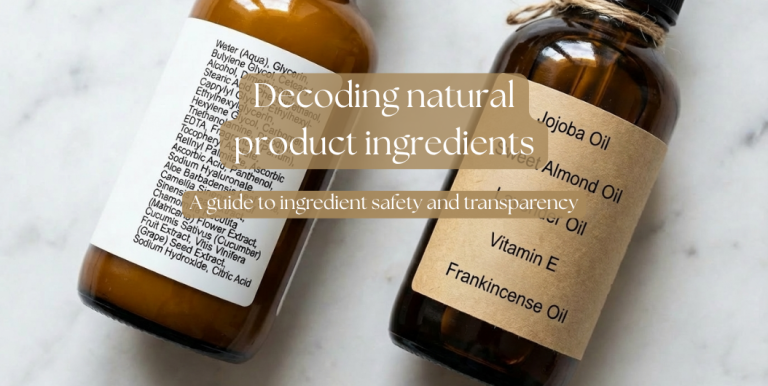
Not sure what an ingredient does? Read our practical guide to decoding natural product ingredients.
What’s listed first?
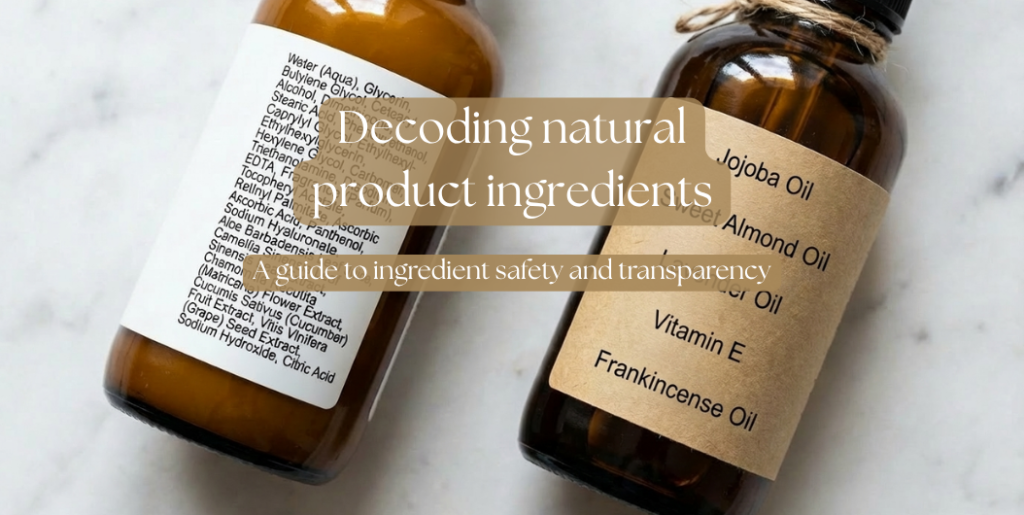
Ingredients are listed in order from most to least. If a product markets itself around a specific herb or extract, but that ingredient appears near the end after multiple fillers, thickeners, or preservatives, you’re getting a very diluted version of what’s being advertised.
That said, placement isn’t everything. Just because a “star herb” is toward the end of the list doesn’t automatically mean there isn’t enough of it. It could mean the herb is just that effective in a lower concentration. But if the majority of the product is made up of cheap fillers and the active ingredient you’re paying for is barely there? That’s worth questioning.
What about fragrance?
This is where things can feel nuanced.
Some people avoid fragrance entirely – and that’s completely valid. Fragrance can be an irritant, especially synthetic fragrance with phthalates and parabens. If you’re sensitive or prefer to avoid it altogether, we respect that. We make plenty of unscented products or products scented with essential oils for exactly that reason. Our scent ratio is also much lighter than what you find at big box stores, as well. That’s on purpose.
But here’s the other side: some people love scent. And for people transitioning into cleaner body care, a good, safe fragrance can make the switch easier. It bridges the gap between conventional products and natural ones.
Not all fragrances are created equal. We understand that better than anyone. We strive to ensure that the few fragrances we use are always phthalate and paraben-free.
Brittany sopko
Founder & master Forumlator
We use fragrances occasionally. But when we do, we make sure it’s phthalate-free and paraben-free. We consider it generally safe, and we use it in our own home and on our own bodies. Our philosophy is that for every product that utilizes a fragrance scent, we offer 3 different essential oil scents as alternatives.
That said, we know not everyone agrees. Some people believe there’s no such thing as a “clean fragrance,” and that’s okay. If that’s you, stick with our unscented or essential-oil-only options. We have plenty.
We meet people wherever they are. No judgment. Just options.
The point is this: whether it’s fragrance or any other ingredient, ask questions. Know what’s in your products. And choose what works for your body and your values.
The Science: Why Less Can Actually Be More Effective
Your skin has a barrier. It’s designed to keep things out and keep moisture in. When you overload that barrier with 20+ active ingredients, you’re asking it to process, absorb, and respond to all of them at once.
That’s a lot.
And for some people, it’s too much. The skin gets overwhelmed. Sensitization risk goes up. Irritation becomes more likely. The barrier weakens instead of strengthening.
Simple formulas respect your skin’s capacity. They give it what it needs without asking it to do too much.
The same principle applies internally. Your body is incredibly intelligent. It knows how to process and use plant compounds. It’s been doing it for thousands of years, just the way God intended. But when you take a tincture with 10+ herbs, your body has to sort through all of them, figure out what to do with each one, and prioritize its response.
I want to note that taking a tincture blend, whether from us or one you made yourself, isn’t a problem. Blends are great, and we use them daily in our family. We just recommend starting simple first so you know what you’re taking, why you’re taking it, and how your body responds to each individual herb.
A single herb or a simple blend gives your body a clear message. It can focus. It can respond efficiently.
Simple doesn’t mean weak. It means focused. And focus is powerful.
INGREDIENT SPOTLIGHT:
Calendula
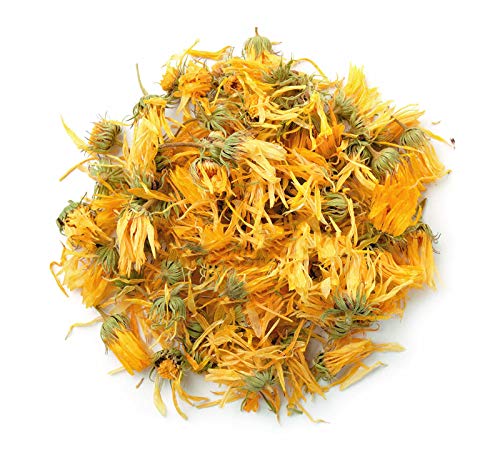
Why we love it: Calendula (Calendula officinalis) is a skin-healing powerhouse. It’s anti-inflammatory, antimicrobial, and incredibly gentle – which is why we use it in our Baby Butter Balm, Hippie Healer, Eczema Salve, and Diaper Rash Balm. It’s one of the best herbs for cuts, rashes, irritation, and any kind of skin damage that needs support. If your skin is angry, calendula is the friend that shows up with exactly what you need.
How we use it: Infused oils, salves, and balms for topical skin care.
Less is More: Beyond the Bottle
This philosophy doesn’t stop at formulation.
Less is more in how we eat. Whole foods with five ingredients beat processed foods with 40.
Less is more in how we live. Fewer commitments, more presence. Fewer distractions, more focus.
Less is more in how we consume. Fewer products that actually work beat a cabinet full of things you never use.
And less is more in how we care for ourselves. Simplifying your routine, whether that’s skincare, supplements, or daily habits, creates space. It reduces decision fatigue. It helps you pay attention to what actually makes a difference.
When everything is stripped down to what matters, you learn to listen. To your body. To your intuition. To the quiet signals that get drowned out when life is too loud.
This is why we teach kids to start with single herbs. This is why we encourage elimination approaches. This is why we resist the urge to add more just because we can.
Because clarity comes from simplicity. And simplicity creates trust.
Closing: Trust Over Trends
The wellness industry loves trends. It loves the next big ingredient, the newest superfood, the most exotic botanical.
And there’s nothing wrong with innovation. But innovation for its own sake isn’t helpful. Adding ingredients to sound impressive isn’t true formulation. It’s marketing. And it’s not helpful to your body.
We formulate with intention. We choose what works. We leave out what doesn’t serve you.
Simple doesn’t mean basic. It doesn’t mean boring. It doesn’t mean less effective.
It means focused. Thoughtful. Trustworthy.
And trust is where real support begins.
Your body knows what to do with simple, intentional care. Give it clarity, and it will respond.